| ||||||||||||||||||||||||||||||
PLEASE LOGIN USING THE INFORMATION ABOVE TO ACCEPT/REJECT THE INVITE AND TO DOWNLOAD PLANS | ||||||||||||||||||||||||||||||
Tuesday, July 22, 2025
Proposal from Steve Grover Now Available for Review
Friday, July 15, 2016
Helping Mothers Survive in Togo
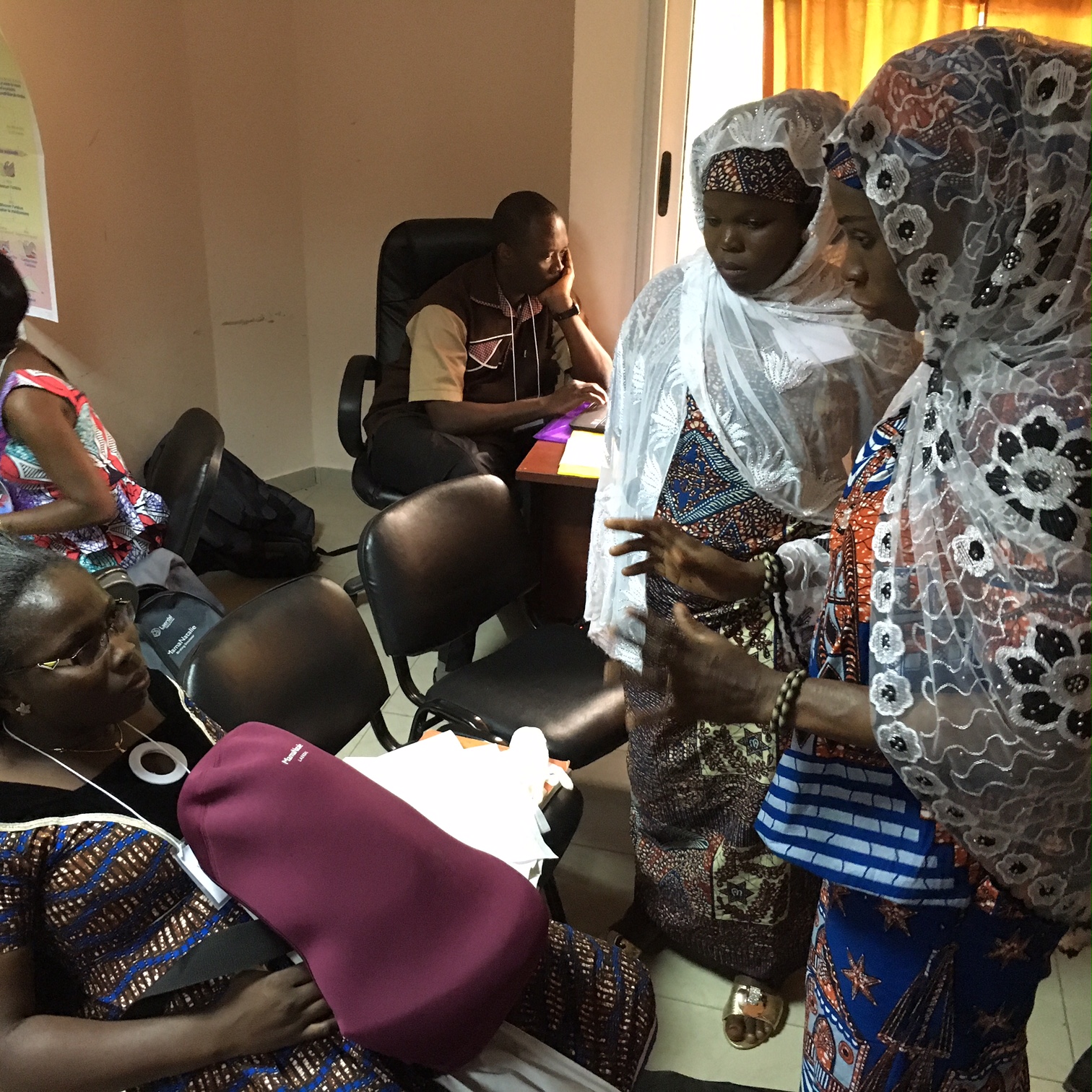
Today our LDS Humanitarian Services team taught Helping Mothers Survive to over a hundred midwives and doctors in 2 groups here in Atakpamé, Togo. We used the mannequins to test the participants on their response to maternal hemorrhage. The mannequins have a reservoir that can be filled with water which we can dye red to simulate blood. Then the person wearing the "MamaNatalie" apparatus (see: https://www.youtube.com/watch?v=5EgPIcIus4o) can adjust the amount of bleeding based on how the provider responds to the emergency. We drilled them over and over again. I think they will now be more prepared to respond to OB emergencies!
Thursday, July 14, 2016
Helping Babies Breathe-Day 4; HBB Closing Ceremonies and Equipment Distribution

We completed the HBB training today with the 2nd group. At the end of the course we had a closing ceremony. One of the doctors from Togo’s Ministry of Health attended and spoke. I was invited to speak as well, since I am designated the medical director of these courses. I thanked the participants for their hard work and thanked the Ministry of Health, the Pediatric Society and UNICEF for their support. I told them that each participant would be receiving a bag and mask, stethoscope, suction bulb, a CD with all of the course materials and a printout of all the course materials.
Then each facility will receive a bag with a teaching kit which includes the same materials as well as the resuscitation manequin, the flipchart, and about 25 manuals.
I explained that these materials are purchased with money from the Humanitarian Fund of the Church of Jesus Christ of Latter-day Saints. Individual members of the Church throughout the world, donate to this fund because of our belief that each of us is a child of God and that, as the Lord taught, we should love one another. For that reason, we want to help the mothers and babies of Togo and other developing countries through Helping Babies Breathe and Helping Mothers Survive.
Wednesday, July 13, 2016
Helping Babies Breathe-Day 3
Today we began teaching HBB to our second group of midwives. They work in hospitals of various sizes all around Togo.
They did a great job learning to ventilate a baby who is having problems breathing after birth. Many said that they do not have bag and mask resuscitators at their hospitals, so it will be nice for them to receive this equipment.
As part of the training, participants are asked to practice teaching with the flipchart. On the back of the flipchart are the corresponding main points that correspond with each image. They did very well teaching each other.
Tuesday, July 12, 2016
Helping Babies Breathe-Day 2; Preparing the Equipment
Today we taught the second day of our first 2-day HBB course here in Atakpamé. We had about 50 participants from 46 different hospitals. The midwives did great! Many of them work in small health centers where they work alone with one nurse. The midwives are on call 24/7/365. They live at the small hospital. What dedication!After the course, we prepared the teaching kits and resuscitation equipment that LDS Humanitarian Services will be donating. They will receive this equipment later this week.
Monday, July 11, 2016
Teaching Helping Babies Breathe in Atakpamé-Day 1
Today we taught Helping Babies Breathe to about 50 midwives who are from the Plateaux and Maritime regions of Togo. The local instructors we trained in Lomé did great!Most said that they do not have a bag and mask available in their hospitals yet. So the bag and mask kits that will be given to them at the end of the course will go to good use. The neonatal resuscitation equipment has been purchased by funds donated to the Humanitarian Fund by members and friends of the Church of Jesus Christ of Latter-day Saints.
Prior to the beginning of the course our Team Leader and I attended the Opening Ceremonies. There were representatives of UNICEF, the Pediatric Society of Togo, and the Regional and National Health Ministries. Except for mine, the speeches were quite formal! The UNICEF representative said that infant mortality in Togo is now about 27 per 1000 (or just under 3% of births). Maternal mortality is 401 per 100,000 women giving birth.
The press was there, and I was interviewed for Togo TV.
Sunday, July 10, 2016
The Sabbath in Lomé
Today we attended Church in Lomé. There are 16 congregations in the Lomé area, but only one chapel. Three of the congregations meet there and the other wards and branches meet in rented facilities around the city. Missionaries will be sent to Kpalime in the next few weeks. This will be the first area outside of the capital where missionaries will labor.The chapel in Lomé is beautiful. It was built in 2011. It was a wonderful to worship with the saints in Lomé.
Our opening hymn was "How Firm a Foundation."
I love the words of the second verse both in French and in English:
- «Pendant l’abondance ou dans la pauvreté,Aux jours de souffrance ou bien dans la santé.Sur terre ou sur mer, au foyer, au désert,As-tu besoin d’aide, as-tu besoin d’aide,As-tu besoin d’aide, mon bras t’est offert.»
Saturday, July 9, 2016
The New Silk Road
Tonight we had a lovely dinner at the home of one of the pioneers of the Church here in Togo (see my entry from 2013: http://togodoc.blogspot.com/2013/12/the-morning-breaks-shadows-flee-lo.html and https://history.lds.org/article/pioneers-in-every-land-togo-dieudonne-attiogbe?lang=eng).
In returning to our hotel, we drove along a beautiful new highway built by the Chinese. China also built Lomé's new $150M airport where we arrived.
The Silk Road was an ancient network of trade routes that were central to cultural interaction through regions of the Asian continent connecting the West and East from China to the Mediterranean Sea.
The Silk Road derives its name from the lucrative trade in Chinese silk carried out along its length, beginning during the Han dynasty (207 BCE – 220 CE). The Chinese took great interest in the safety of their trade products and extended the Great Wall of China to ensure the protection of the trade route.
Trade on the Silk Road was a significant factor in the development of the civilizations of China, the Indian subcontinent, Persia, Europe, the Horn of Africa and Arabia, opening long-distance, political and economic relations between the civilizations. Though silk was certainly the major trade item from China, many other goods were traded, and religions, philosophies, and various technologies, as well as diseases, also travelled along the Silk Routes. In addition to economic trade, the Silk Road served as a means of carrying out cultural trade among the civilizations along its network.
After his recent state visit to China, Togolese President Faure Gnassingbe spoke of his vision for his country to become the "anchor point" in West Africa for the new Silk Road initiative forwarded by China.
"Togo intends to be the anchor point in West Africa for the New Silk Road initiative supported by China and which is based on ties between countries through land and maritime infrastructures."
The Togolese head of state noted that China is committed to aiding African countries in their economic structural changes. In this regard, he underscored that Togo "possess many advantages to serve as a gateway" for West Africa.
I have also seen China's involvement in the development of other countries in Africa where I have served.
The "New Silk Road" is a development strategy and framework, proposed by Chinese leader Xi Jinping that focuses on connectivity and cooperation between China and other countries in Eurasia and Africa. The strategy underlines China's push to take a bigger role in global affairs, and its need to export China's production capacity in areas of overproduction such as steel manufacturing.
It is interesting to me to see China's influence in Togo as I also have seen it in DR Congo. I can't help but wonder if the U.S. is missing out on an opportunity to strengthen ties with the countries of Africa.
Friday, July 8, 2016
Helping Mothers Survive/Aider les Mères à Survivre
Today we taught our first "Helping Mothers Survive" course. The training is simulator-based and is designed for frontline providers in countries with high burdens of maternal mortality. This was the first time that this curriculum has been taught by LDS Humanitarian Services in Togo, and one of the first times it has been taught in Africa.
The focus of "Helping Mothers Survive" is how to treat bleeding after birth. The number one cause of maternal mortality worldwide is postpartum hemorrhage. Maternal mortality in Togo is estimated to be 368 deaths per 100,000 live births, whereas in the U.S. it is estimated to be 21 deaths per 100,000 live birth and in Estonia it is 2 deaths per 100, 000 live births.
Today we trained eleven midwives and doctors who will travel with us to Atakpamé and help teach 100 midwives from that region this coming week.
Our hope and prayer is that this training will help these maternal health care workers broaden their skills to save lives.
To see the steps we teach visit: https://www.jhpiego.org/static/hms/images/hms/BAB-HMS-1-16-14.jpg

Thursday, July 7, 2016
Paris: City of Lights; City of Memories; City of a New Temple
I thought about all the wonderful memories I have of Paris and my visits there with Cathryn and with Geoff, Jason, and Emma on different occasions.
I passed through Paris on my way to Toulouse as a new missionary in 1980. Next week, Brian will also pass through Paris as he travels to Turkey to serve as a missionary 36 years later!
A few days after Brian passes through Paris, the Mormon Tabernacle Choir will visit the New Paris Temple where they will make a video singing in front of the new temple that will be completed next year.
In May 2004, President Hinckley visited Paris and said, "I don't know when it will be built, but I am confident that we will have a temple for the French-speaking people of the Church sometime in the future. . . You are worthy of the richest blessings of the Church. You are worthy of every blessing which this Church has to offer. And there is no blessing greater than the blessing of the house of the Lord. . . Sometime in the future a beautiful house of the Lord will grace this land."
What a blessing the new temple will be for the people of France!
Monday, July 4, 2016
Returning to Togo
I am grateful for the opportunity this month to return to Togo to teach Helping Babies Breathe (HBB) in Atakpamé, the 5th largest city in Togo. It is located in the Plateaux Region of Togo, one of the 5 regions of Togo. For the first time, I will also be teaching Helping Mothers Survive (HMS) along with HBB. I invite you to read my blog to learn more about our LDS Humanitarian Services project in Togo.


Sunday, December 8, 2013
What I Can Learn from an Apostle about Africa
“The Church is vibrant and growing in Africa,” said Elder David A. Bednar of the Quorum of the Twelve Apostles during his
recent visit to Africa.
There is an eagerness and light in the eyes of the African
Latter-day Saints, he said. “This is a place where many people live
challenging, difficult lives. They don’t have many of the temporal comforts and
blessings that people in the Western world have. Many of these Saints are
grateful to have one substantial meal a day. Yet, because of the gospel of
Jesus Christ, they have great light and hope. I learn a great deal from the
people every time I visit the African continent.”
“Africa is an enchanting and inspiring place,” said Elder
Bednar. “Africa is diverse and complex. There are highly industrialized and
sophisticated communities and rural and simple villages. The gospel of Jesus
Christ gathers all kinds of people into the gospel net. Even though there is a
common strong faith among the Latter-day Saints, there is also a remarkable
diversity.”
Africa is one of the most rapidly growing areas of the LDS
Church. Referring to that growth, Elder Bednar mentioned that local leaders in
the Democratic Republic of the Congo have an unusual weekly challenge in
sacrament meeting — finding enough time for confirmations. During a recent
meeting, 18 new members were confirmed.
“This is a land, a people, and a place of great faith in the
Lord Jesus Christ,” he said. “You can feel it as well as hear it when these
Saints pray and when they sing.
“These members have a simple faith that is uncluttered. It
is focused on Christ. And it brings many blessings and spiritual gifts into
their lives.”
Elder Bednar affirmed, “Every time I have an opportunity to
come and witness what the Lord is accomplishing among the people here, it is
thrilling for me. Africa changes me.”
And Africa changes me. . .
Now it is time to return to Colorado. I am thankful to have
met so many wonderful people here in Togo. I admire my Togolese medical
colleagues for their professionalism and their desire to improve the care that
they give to the mothers and babies of Togo.
When I get bogged down with the petty concerns of life, I
will strive to remember that the sun rises and sets (at 6 am and 6 pm!) upon
kind and caring people everywhere some of whom live in mud huts with thatched roofs across the
world in Togo, and that they love and care for their children just like I do. I
will return home with more gratitude to my Heavenly Father for my wife and
children and for the spiritual and temporal blessings I receive from Him. How
fitting it will be to return to commemorate the birth of His Son this
Christmas. see: http://mormon.org/story-of-Christmas?cid=HPWE120413210
Thank you for your interest and for reading this blog, for “A
traveler without observation is a bird without wings.” Moslih Eddin Saadi
Merry Christmas to all!
Steven Grover, M.D.
Highlands Ranch, Colorado
The Morning Breaks, the Shadow’s Flee: Lo, Zion’s Standard is Unfurled: A Stake is Created in Lomé, Togo
In 1989, a young Togolese father was living in London while he was working in the Togolese Embassy there. His family remained in Togo, but he visited them often. He met the Mormon missionaries and was deeply impressed by them, their teachings, and the Book of Mormon, and he was baptized a member of the Church of Jesus Christ of Latter-day Saints at the Hyde Park Chapel in London. When he returned to Togo in the early 1990's, he wrote to the Church offices in South Africa and asked if there were any other members in Togo. They sent him a list of 70 members. He wrote to all of them, but only 6 responded. He got them together to organize a group of members for meetings. Elder James O. Mason (my mother's first cousin) came to Lomé when he was a general authority serving in Africa and organized the first official group or branch in 1997. The young man became the first branch president. Soon his young teenage son and some of his siblings and cousins were baptized in a hotel swimming pool in Lomé. His mother was baptized 2 years later. This young man (the son) later served as a missionary in Ivory Coast and Benin and upon his return married his sweetheart in the Accra Ghana Temple. We have had the honor of being accompanied by this fine young man throughout our stay in Togo. He has been an invaluable member of our team.
Last year the modern pioneer who joined the Church in London
supervised the construction of the first LDS Chapel in Lomé. Two local
congregations now meet there, and the other 10 local congregations meet in
rented facilities around the city.
Today, Elder Terence M. Vinson of the Seventy of the Church of Jesus Christ of Latter-day Saints presided over
the creation of the first stake in Togo. It was
a wonderful blessing for me to attend the conference and feel of the spiritual
outpouring that occurred. A stake (similar to a
diocese) is a group of wards (similar to a parish). Members of the Church are
to “gather” to the stakes of Zion. A stake will allow the people of Lomé to
benefit from the full program of the Church. The newly called stake president
paid tribute to his first branch president, the young man who had been baptized
so long ago in London, who was his early mentor in his volunteer Church service
when there was only one branch. The new stake president’s wife spoke in the
conference and said, “My husband is a good man. He is full of love for his
family, but he isn’t perfect. God chooses men with weaknesses, because they
always look to God for his help.” (The calling came to him on their
anniversary.) The stake president said, “If there is a task that I want to
accomplish, it is to serve the Lord. I ask for your prayers; without you I can’t
do anything.” A patriarch will be called who will give patriarchal blessings
to local members in their own language. This historic day will be the beginning
of many more blessings that will be poured out upon the people of Togo.
Today after the conference, our team was welcomed for a lovely Togolese meal at the home of our friend and team member where we met his father, the man who had been baptized in London years ago.
With people like this wonderful young man with whom we have
served this week and his family, the future is bright for the Church here in
Togo and for all the people of Togo.
“Angels from heaven and truth from earth
Have met, and both have record borne;
Thus Zion’s light is bursting forth.”
The Morning Breaks see:
https://www.youtube.com/watch?v=usbMQ8bLeFw
Text by Parley P. Pratt
Music by George Carless
Saturday, December 7, 2013
Languages of Togo
Togo is about the size of West Virginia, but there are 36
languages spoken here. All these people with different local ethnolinguistic
backgrounds communicate with each other in French. The main languages around
Lomé is Ewe (900,000 speakers), and the main language in the north is Kabiyé
(700,000 speakers). Some of the other languages that have >100,000 speakers
include: Gbe-Waci, Gen, Gourmanchéma, Ifé, Ikposo, Moba, Nawdm, Nitcham, &
Tem.
Togo Health Statistics
(Rank=country comparison to the world)
Population growth rate: 2.73% rank=21 (US=0.9% rank=124)
Birth rate: 34.9 births/1000 population rank=27 (US=13.7 rank=147)
Maternal mortality: 300 deaths per 100,000 live births rank=40; 14x US rate (US=21 rank=137)
Infant mortality: 48 deaths/1000 live births rank=43; 8x US rate (US=5.9 rank=174)
Physician density: 0.05 physicians/1000 population (US=2.42)
Hospital bed density: 0.7 beds/1000 population (US=3)
Obesity: 4.3%
rank=169 (US=33% rank=18)
Subscribe to:
Posts (Atom)